

Gold Behind the Scenes
The World Wants Gold!
Central bank gold buying continues behind the scenes, despite market ups and downs (mostly ups!)
As gold and silver prices shattered records in 2025, with gold having now reached unprecedented highs above $5,000 per ounce and silver over $100, one might expect caution from major buyers. But the crisis in overextended, overindebted fiat money is so severe that the informed insist on acquiring gold and silver while they can, even in volatile circumstances.
And so as President Trump named his incoming choice for the Federal Reserve chairmanship, one thought to represent a hawkish monetary viewpoint, Wall Street speculators triggered a brief sell-off of profit taking. That is a reaction that must be expected in any market making a powerful move up. The only real way for speculators who have taken the ride higher to realize their profits is by selling.
Yet it is proving to be a transitory affair. The fundaments that have been driving gold and silver higher remain in place. Gold authority Alasdair Macleod describes today’s monetary crossroads this way:
The dollar is on its way to zero, and it is increasingly difficult to see how this outcome can be stopped. This is what the end of a fiat currency system looks like. Those who do not understand it stand to lose everything.
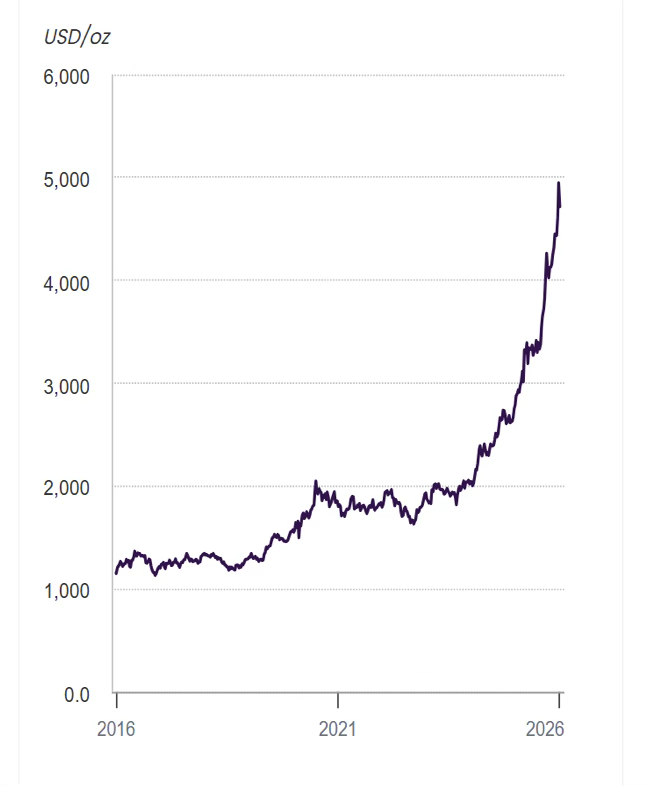
The persistent buying, even amidst turbulence from trade wars, inflation fears, shifting monetary policies, and choppy markets underscores gold’s enduring global monetary role, one stretching back to the earliest days of human civilization.
According to World Gold Council surveys, there is an unprecedented gold consensus among central bankers: 95% expect global gold accumulation to continue, with 43% planning increases in their own reserves and none anticipating declines.
The adjoining 10-year gold chart puts today’s gold price in perspective, revealing an ongoing global monetary reset that we have been describing.
It is clear from this long-term price performance that the trend exhibited represents long-term shift in that has been called “the debasement trade,” a diversification from the dollar and its unpayable debt underpinning. It is here to stay.


Never Miss the Real News!
Get all the news from the week sent to your inbox
Your privacy is very important to us. We will never sell your information. We deliver the news posted each week, and nothing more. Easily unsubscribe any time.


